Showing posts with label Kinetoscope. Show all posts

Saturday, September 3, 2011

The Earliest Films

The earliest films were non-narrative documents of mundane events or entertainment acts.  The competing companies where those that had projectors.  In the US, Edison Company had the Kinetoscope.  In France, the Lumière Brothers had the Cinematograph.  And in England, Charles Jenkins had the Phantoscope (which was the first machine to project a motion picture).
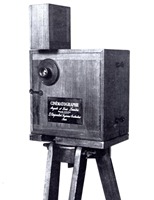
Cinematograph detail_12_clip_image023[1]

There earliest known surviving celluloid film was shot by by Louis Le Prince on October 14, 1888 in Roundhay, Leeds, West Yorkshire, England.

Edison Company produced many short films using the Kinetograph, the most famous of which (for some reason or other) was Fred Ott’s Sneeze (1894).  This was considered a documentary.

However, the sneeze wasn’t the earliest.  The earliest by Edison that I could find was Dickson’s Greeting (1891).  Dickson invented the Kinetograph technology for Edison.

Other Edison films were entertainment acts.  Edison Co were trying to make money after all and the best way to do that was to entertain.  Here’s a compilation of some early Edison films for your enjoyment.

The Lumière Brothers were also interested in cashing in on this new medium with their actualités.  Here’s a compilation of their films for your enjoyment.

But most of these short films were for the Nickelodeon arcade traffic.  Soon, films would become longer and they would start to tell stories. 

Next article The First Narrative Films

Previous article Before Film

Sunday, August 28, 2011

Before Film

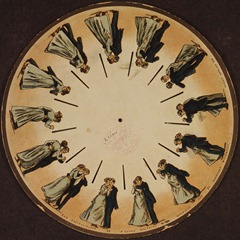
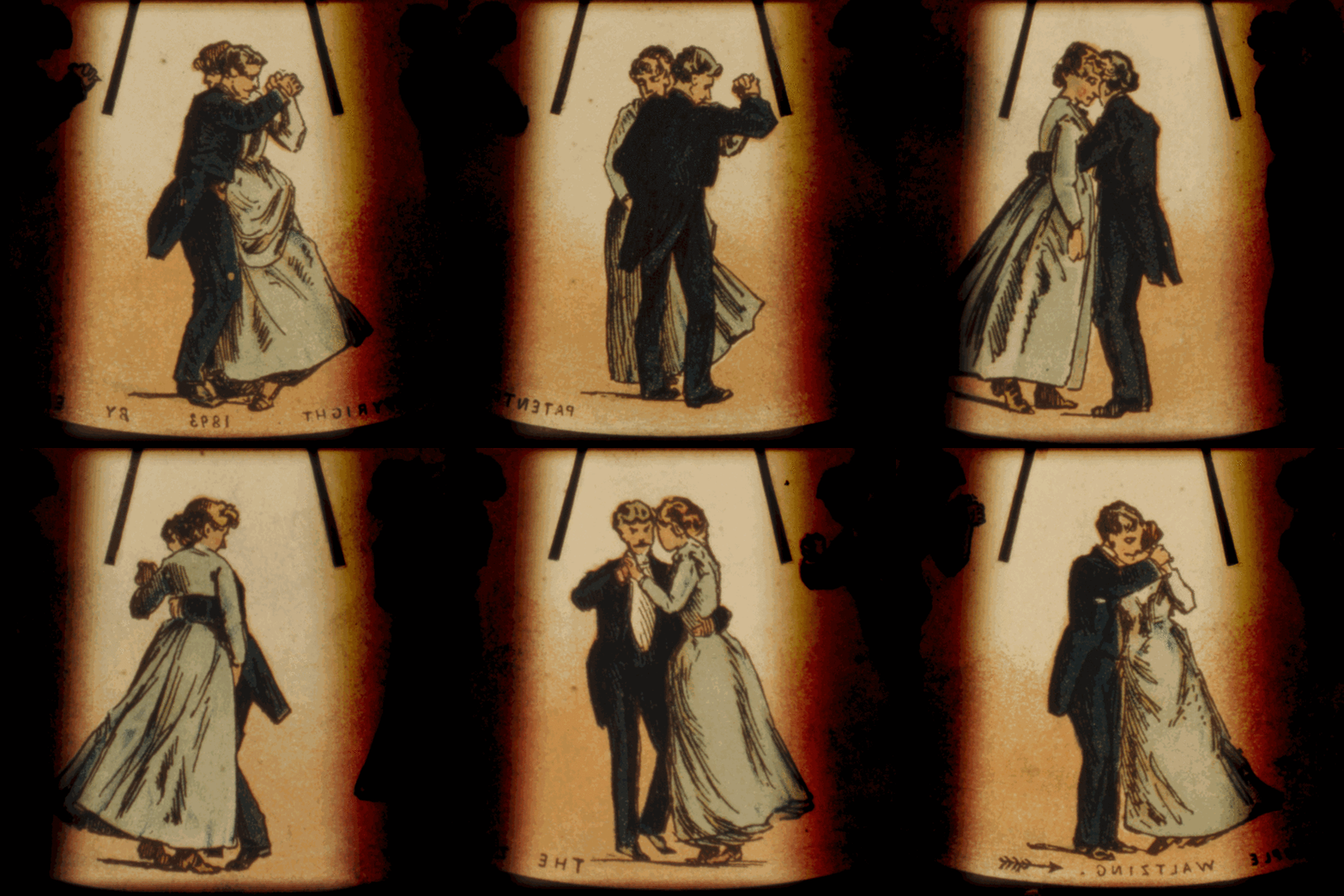
Before screenwriting was even in the picture, we needed the picture – a moving one at that.  The first “motion pictures”  came to us in the form of mechanical devices.  One was called the Phenakistoscope which was invented by Joseph Plateau.

Muybridge - Phenakistoscope disk Muybridge - Phenakistoscope disk animated

Plateau was credited with the invention even though the idea had been around since Euclid.  The Phenakistoscope disk above was done by Eadweard Muybridge.  More on Eadweard later. 

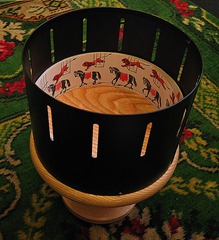
The other invention was the Zoetrope.  Invented by Ding Huan in China in 180 AD but modernly credited to William George Horner.  It became popular in the 1860s.

Zoetrope

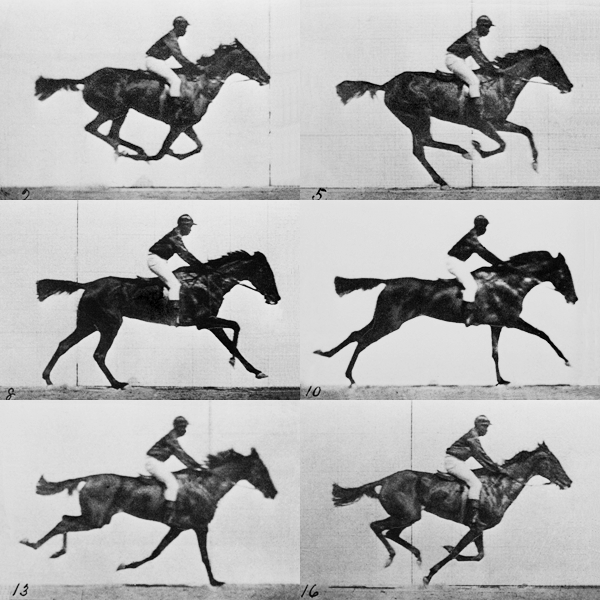
Eadweard Muybridge, mentioned above, is considered the first person to make a motion picture – capture live images.  Eadweard captured the images of a horse using 24 trip wired cameras to settle a bet made about  whether a running horse ever had all four legs lifted off the ground at once. 

Muybridge - Sallie Gardner Muybridge - Sallie Gardner animated

After Muybridge the first motion picture camera was invented by William Friese-Greene.  But his ‘chronophotographic’ camera only ran at 10 frames a second which was far too slow for practical use.

Chronophotographic camera  Muybridge - Woman walking down stairs

The example chronophotography is another by Eadweard Muybridge, Woman walking down stairs.

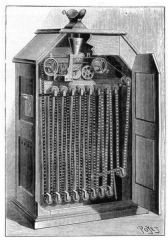
In 1891, K. L. Dickson working for Thomas Edison invented the Kinetograph (aka Kinetoscope)  which took a series of instantaneous photographs on standard Eastman Kodak photographic emulsion coated on to a transparent celluloid strip 35 mm wide. 

Kinetoscope

And though it might have looked a bit different than today’s cameras, the age of motion pictures had begun.

Next article The Earliest Films